That gap is expensive.
Traffic volume keeps growing while meaningful player activation stays flat. Budgets shift between channels without clear visibility into quality. Growth teams are forced to optimize acquisition using delayed revenue signals instead of real behavioral data.
This is where iGaming Acquisition Intelligence changes the model.
Instead of treating all traffic equally, Acquisition Intelligence evaluates player quality early, using behavioral signals to predict activation potential and long-term value before traditional KPIs mature.
Why Traditional Acquisition Analytics Falls Short
Most acquisition stacks are built around attribution and registration funnels. They show where players came from and whether they converted.
What they don’t reveal is which players are likely to activate and engage.
That creates structural inefficiencies:
- growth teams optimize for volume instead of activation quality
- CRM teams lack early segmentation clarity
- product teams don’t see how acquisition impacts onboarding behavior
- budget decisions rely on delayed revenue averages
Revenue-based insights arrive too late. By the time lifetime value becomes clear, spend is already locked in and traffic quality has already impacted performance.
Without early player behavior analysis, acquisition becomes reactive instead of strategic.
From Clicks to Player Activation Signals
Acquisition Intelligence shifts the focus from surface metrics to behavioral outcomes.
Instead of waiting weeks for revenue patterns, the platform analyzes first-session behavior in real time. Engagement depth, exploration patterns, interaction frequency, and onboarding flow progression are combined into predictive activation models.
This enables AI-driven player activation in iGaming - identifying which users are most likely to become engaged players.
The result is clarity at the moment acquisition decisions are made.
Growth teams gain early visibility into activation potential. CRM teams receive structured segments for onboarding. Product teams understand how traffic sources influence early user journeys.
Traffic Source Quality Beyond Attribution
Clicks and installs do not equal value.
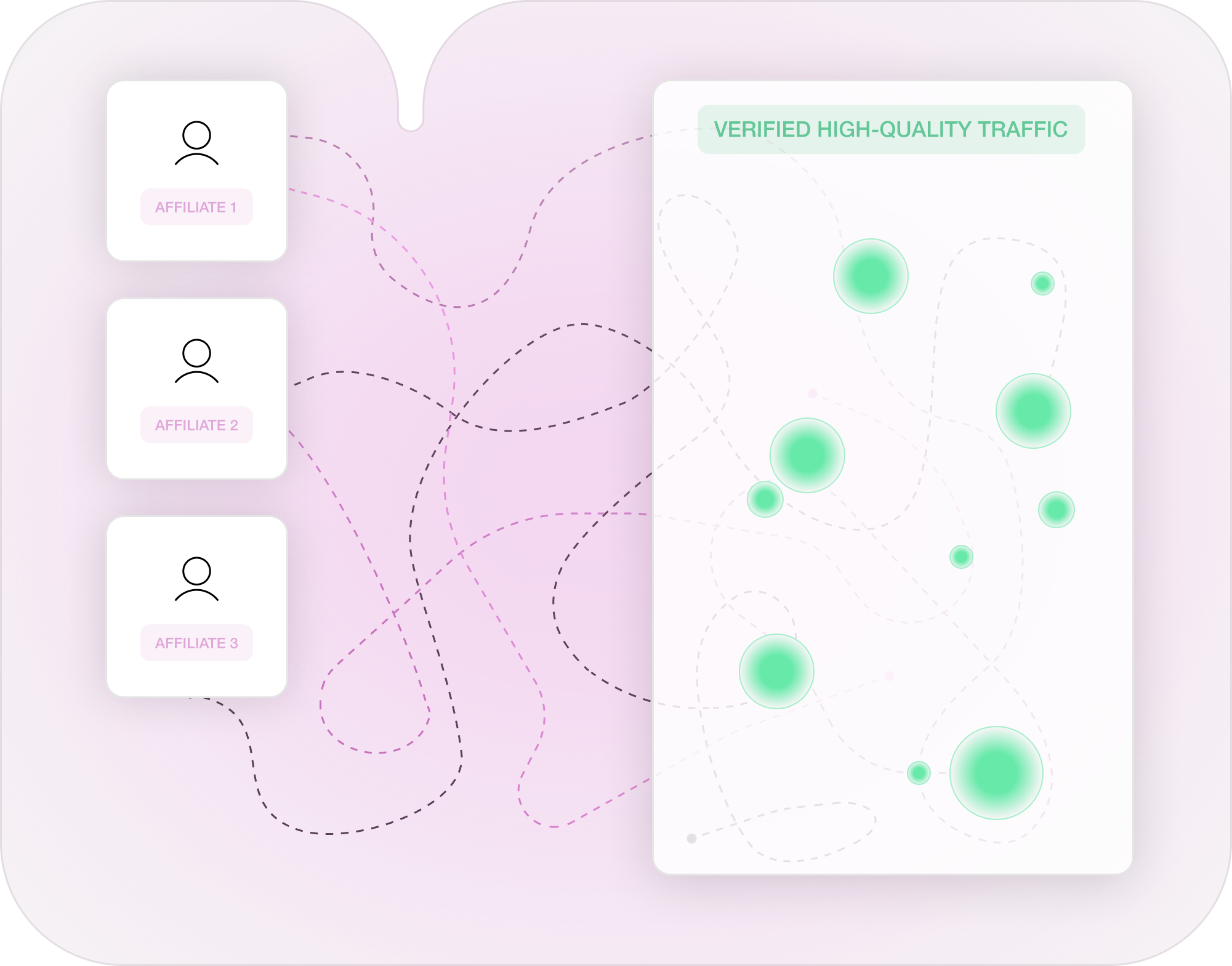
Two traffic sources may show similar cost-per-install metrics while producing entirely different activation outcomes. One drives engaged exploration. The other produces short, low-intent sessions.
Acquisition Intelligence evaluates traffic source quality through behavioral analysis rather than attribution alone.
By measuring early activation patterns, the system highlights which channels consistently generate engaged users and which underperform beyond surface metrics.
This enables acquisition quality optimization in iGaming - reallocating budget toward sources that produce activation and measurable downstream value.
Over time, this feedback loop improves efficiency without increasing acquisition spend.
Predicting Value Before Revenue Appears
One of the strongest advantages of Acquisition Intelligence is early value prediction.
Instead of classifying players after revenue thresholds are crossed, behavioral models identify promising engagement trajectories from the first sessions.
Players who demonstrate strong activation signals are flagged early. Lower-intent cohorts are deprioritized before additional spend is allocated.
Teams can prioritize onboarding and activation strategies based on predicted value rather than historical revenue data.
Acquisition shifts from volume-driven to value-driven.
Turning Intelligence Into Operational Decisions
Insights must translate into action.
Acquisition Intelligence delivers structured scoring outputs that integrate directly into existing CRM, UA, or analytics systems. Activation scores and quality segments become operational inputs for campaign optimization and onboarding flows.
Growth teams adjust spend based on player quality signals. CRM teams tailor early journeys using predicted engagement tiers. Product teams refine onboarding based on behavioral impact by source.
Instead of fragmented reporting, teams operate from a unified intelligence layer.
Activation becomes measurable. Budget allocation becomes evidence-based. Growth becomes structured rather than speculative.
Integration Without Disruption
Acquisition Intelligence integrates into existing infrastructures without heavy re-architecture.
The system connects to event streams or BI datasets and processes behavioral signals securely. Prediction outputs are delivered as structured feeds compatible with CRM and internal dashboards.
No major pipeline rebuilds are required.
Engineering teams maintain control. Product teams gain early insight. Growth teams deploy quickly.
The system operates on behavioral data and does not require personally identifiable information.
What Teams Typically Achieve
When acquisition is guided by behavioral intelligence, platforms typically see:
- higher activation rates
- clearer visibility into traffic source quality
- improved onboarding efficiency
- better allocation of acquisition budgets
Most importantly, teams gain predictability.
They understand which traffic sources produce engaged players, which cohorts show early activation potential, and where budget produces real value.
Acquisition becomes intentional instead of reactive.
Who Acquisition Intelligence Is Built For
Acquisition Intelligence supports teams responsible for growth efficiency and early engagement quality.
Marketing teams optimize spend based on activation signals. CRM teams activate high-potential users sooner. Product teams analyze onboarding impact by traffic source. Data teams operationalize behavioral scoring instead of reporting revenue lag.
If your acquisition strategy still depends on late-stage revenue metrics, this replaces delay with early prediction.
Acquisition success is not defined by registrations.
It is defined by activation.
With early behavioral analysis, AI-driven segmentation, and traffic quality intelligence, acquisition becomes a measurable system - not a black box.
That’s how iGaming Acquisition Intelligence turns traffic into activated players - and activation into long-term value.